
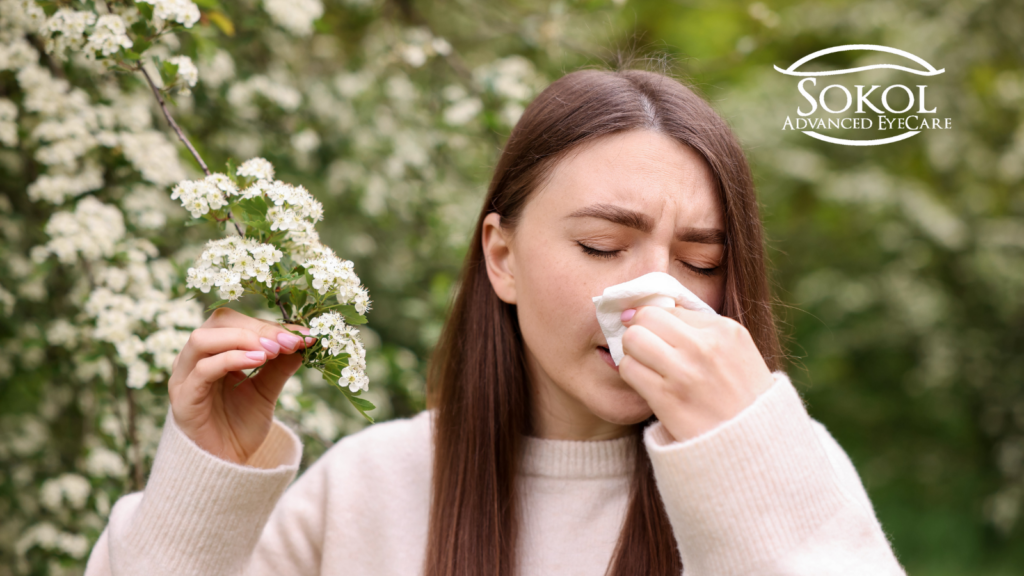
You know spring has arrived in Wisconsin when the snow melts, the trees start budding… and suddenly your eyes feel like they’ve been dusted with sand.
For many people, spring doesn’t just mean warmer weather. It means itchy, watery, irritated eyes that seem to appear suddenly.
If this happens to you every year around April or May, your eyes are likely reacting to spring allergens floating through the air.
Here’s what’s actually happening and how you can help your eyes stay comfortable through allergy season.
Tree Pollen: The Main Culprit in Spring
While fall allergies are often caused by ragweed, spring allergies are usually driven by tree pollen.
In the Midwest, common triggers include:
- Oak
- Maple
- Birch
- Elm
- Cottonwood
Trees release massive amounts of microscopic pollen into the air each spring. Because pollen particles are so small and lightweight, they travel easily on the wind and can enter the eyes without you even noticing.
Once pollen contacts the surface of the eye, it can trigger an allergic reaction in the conjunctiva, the thin membrane that covers the white part of the eye.
This reaction releases histamine, which leads to the classic allergy symptoms people know too well.
Why Your Eyes React So Strongly
The eyes are particularly susceptible to allergens because they are constantly exposed to environmental factors.
Unlike your nose or lungs, which have more filtering mechanisms, the surface of the eye is directly exposed to airborne irritants.
When allergens contact the eye, the immune system responds by releasing inflammatory chemicals that cause:
- Itching
- Redness
- Tearing
- Swelling of the eyelids
- A gritty or burning sensation
Ironically, the tearing that occurs during allergies doesn’t actually solve the problem, it’s part of the inflammatory response.
Why Rubbing Your Eyes Makes Things Worse
One of the hardest parts of eye allergies is the urge to rub.
Unfortunately, rubbing the eyes actually releases even more histamine, which intensifies the itching and inflammation.
Repeated rubbing can also irritate the delicate surface of the eye and worsen symptoms throughout the day.
If your eyes feel itchy, a cold compress or allergy eye drop is far more effective than rubbing.
Allergy Eyes vs. Dry Eye
Many people assume their eyes are simply dry when they start experiencing irritation during allergy season.
While dry eye and allergies can share some symptoms, they are different conditions.
Allergy symptoms often include:
- Intense itching
- Redness
- Puffy eyelids
- watery tearing
Dry eye, on the other hand, tends to cause:
- burning
- fluctuating vision
- scratchiness (in corners)
- light sensitivity
Interestingly, allergies can sometimes trigger or worsen dry eye disease, which is why proper diagnosis is important when symptoms persist.
What Helps Calm Allergy Eyes
The goal during allergy season is to reduce exposure to allergens and calm the inflammatory reaction happening on the eye’s surface.
Several strategies can make a significant difference.
Keep the Eyes Clean
A hypochlorous lid spray can gently clean the eyelids and lashes, helping remove allergens, debris, and bacteria that collect along the lash line during the day.
This simple step can reduce irritation and inflammation.
Use Preservative-Free Artificial Tears
High-quality artificial tears can help flush pollen and allergens away from the surface of the eye.
Preservative-free formulas are preferred, especially if drops are used multiple times throughout the day.
Cold Compresses
Cold temperatures help constrict blood vessels and calm the inflammatory response.
Applying a cool compress over closed eyelids for several minutes can reduce itching and swelling quickly.
Allergy Eye Drops
Antihistamine eye drops can help block the allergic reaction at the source.
Not all drops work the same way, so choosing the right formulation can make a big difference in comfort.
Reducing Pollen Exposure
While it’s impossible to avoid pollen entirely during spring, small lifestyle adjustments can reduce how much of it reaches your eyes.
Helpful strategies include:
- keeping windows closed during peak pollen days
- washing hands after being outdoors
- showering in the evening to remove pollen from hair and skin
- avoiding rubbing the eyes after outdoor activities
- using air filtration systems
These simple habits can dramatically reduce irritation.
When to See an Eye Doctor
If allergy symptoms are severe, persistent, or interfering with your daily life, it may be time for a professional evaluation.
In some cases, eye allergies can trigger additional issues such as:
- chronic dry eye
- meibomian gland dysfunction
- inflammation of the ocular surface
An eye exam can help determine whether symptoms are purely allergy-related or whether another condition may be contributing.
With the right diagnosis and treatment plan, most people can find significant relief—even during peak allergy season.
You deserve comfortable eyes, even when pollen counts are high.
If your eyes are feeling irritated this spring, we’re here to help.